5 Must-Have Equipment Categories for a Growing Coffee Roastery
Equipment as the Foundation of Roastery Quality
For a small or growing coffee roastery, equipment choices directly impact batch consistency, product shelf life, and how quickly you can scale. A well-planned roastery doesn’t need every machine on day one, but it does need the right core categories to turn green coffee into a sellable product.
Here are the five essential equipment categories every growing roastery should plan for — the same categories we cover in our step-by-step guide to building your roastery equipment plan, which picks up once your volume starts pushing past a single setup.
1. Roasting System
Your roaster is the heart of the operation. The right size and control system determine your daily output, roast profile repeatability, and energy requirements.
Recommended options by stage:
| Roastery Stage | Recommended Roaster | Typical Output |
|---|---|---|
| Profile development & R&D | Sample roaster (100g–1kg) | Small test batches |
| Café + roastery hybrid | Shop roaster (3–15kg) | 10–50kg/day |
| Wholesale production | Production roaster (30–120kg) | 100kg+/day |
Key considerations: Heating method (electric vs. gas), data logging capability, cooling tray efficiency, and venting requirements. Size for where you’ll be in 12–18 months, not just today.
2. Grinding & Brewing Lab
A dedicated lab grinder and cupping setup let you evaluate green coffee, validate roast profiles, and maintain quality before any batch leaves the roastery.
Essential lab equipment:
- Lab grinder — consistent particle size for cupping and profile evaluation
- Cupping bowls, spoons, and scales — standardized quality assessment
- Moisture and density meters — track green-coffee consistency
This category is often underinvested in early-stage roasteries, but it’s what separates repeatable products from guesswork.
3. Packaging & Sealing Line
Freshness stops at the package. Even the best roast will stale quickly if packaging doesn’t protect against oxygen, moisture, and light.
Core components:
- Weigher or volumetric filler — consistent bag weights
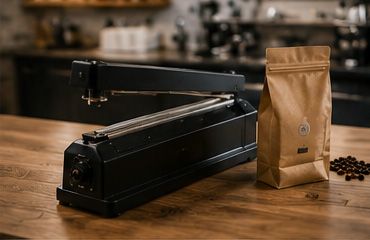
- Bag sealer — heat-seal barrier bags for shelf stability
- One-way degassing valves — essential for freshly roasted whole beans
- Custom-print bags or labels — branding and required product information
Tip: Start with manual filling and a reliable heat sealer. Automate only once your weekly volume justifies the investment.
4. Quality Control Tools
Consistency is what turns a hobby into a business. Basic QC tools help you catch variation before it reaches customers.
Must-haves:
- Color meter or sample tray — track roast development consistently
- Digital scale (0.1g precision) — for sample and bag-weight checks
- Timer and roast-logging software — document every batch
- Airtight sample jars — store reference roasts for comparison
Documented QC creates a feedback loop: you can trace customer feedback back to a specific batch and adjust accordingly.
5. Water Filtration & Maintenance Supplies
Water quality affects every cup you taste in the lab, and preventative maintenance keeps your roaster and grinder running without unexpected downtime.
Recommended approach:
- Install point-of-use filtration for your lab brewing station
- Stock replacement burrs, brushes, seals, and belts before you need them
- Schedule weekly cleaning routines for grinders and monthly inspections for the roaster
Why it matters: Unplanned downtime in a small roastery often means missed orders. A small inventory of critical consumables pays for itself the first time it prevents a production stop.
Building Your Roastery: A Step-by-Step Approach
- Define your target output — how many kilograms per week in 12 months?
- Match the roaster to that output — include venting and electrical requirements
- Set up a cupping lab early — it becomes your quality baseline
- Choose packaging that preserves freshness — not just packaging that looks good
- Plan maintenance from day one — brushes, filters, and spare parts
- Document everything — roast logs, QC checks, and customer feedback
How CoffeeEQ Can Help
CoffeeEQ helps small and growing roasteries research and compare equipment across all five categories — from sample roasters and production drums to grinders, packaging machines, sealers, consumables, and replacement parts. We focus on helping you shortlist options that fit your volume and maintenance needs; supplier specifications, certifications, and commercial terms should be confirmed directly before you order.
Whether you’re building a café-roastery hybrid, an independent wholesale roastery, or a mobile coffee kiosk, we can help you select a configuration that matches your output goals and budget.
Ready to equip your roastery? Contact our team to discuss your requirements and get help comparing a configuration that fits your output goals and budget.